
Author: Nanny Finder
Updated:
Going back to work, a few hours to get things done or an evening out together. People look for a nanny for different reasons, but the question is usually similar: how do you find someone you can trust and with whom your child will feel at ease?
Finding listings is only the start. You still need to talk to candidates, agree on the rules and allow time to get to know each other. Below you will find a plan to help you through this process - from defining your needs to the first day of care.
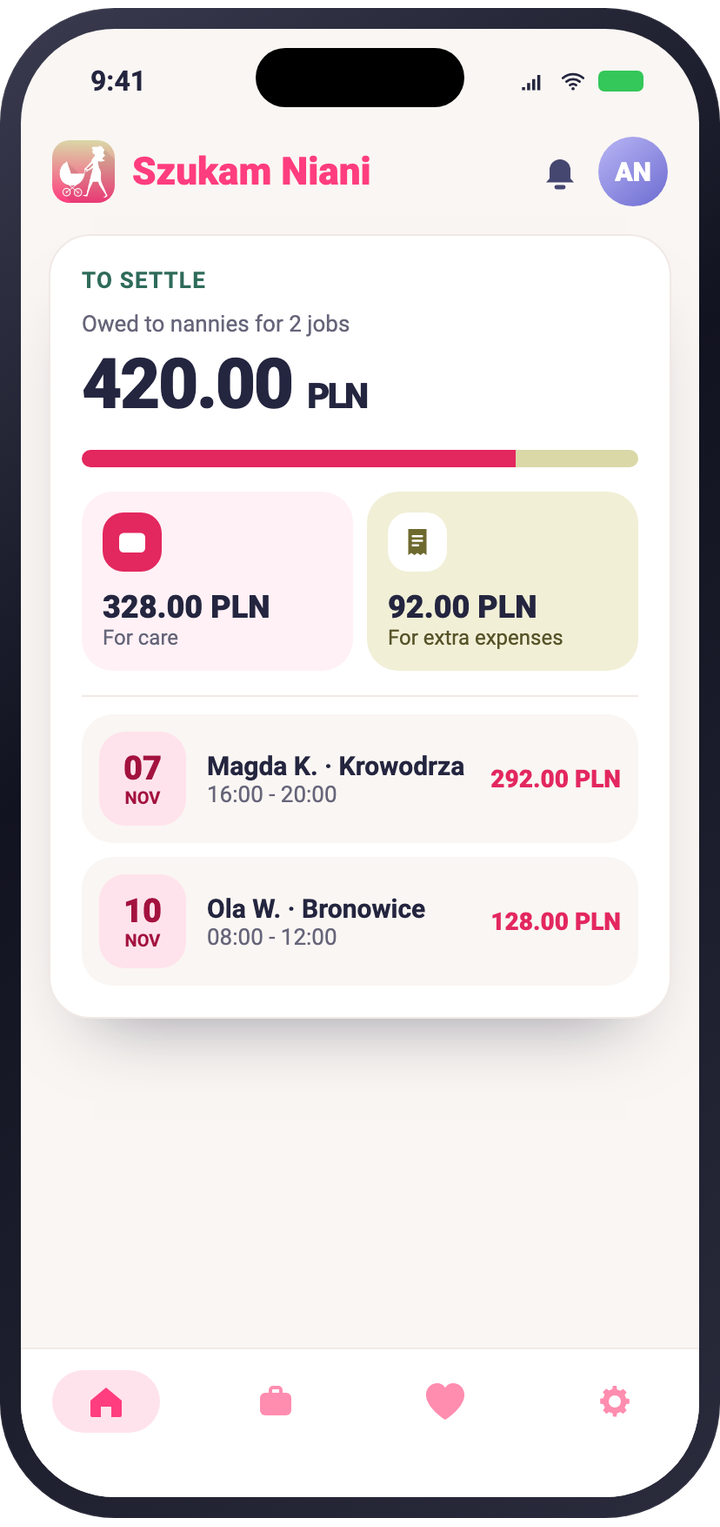
If you want to start looking straight away, try the Nanny Finder app. You can read more about how it can help you on the Find a nanny page.
1. Decide what kind of help you need
Before you start looking for a nanny, think about what your week should look like. Do you need care from Monday to Friday, help picking your child up from preschool or a few hours on selected evenings?
Write down the days, hours, place of care and planned start date. Add your child's age and the duties you want to entrust to the nanny. Caring for a baby is different from an afternoon with a five-year-old.
Set a budget too. Multiply the number of hours per month by the rate you have in mind, and when planning the full cost, take the form of employment into account. If the hours may change, say so from the beginning. "Sometimes we stay late at work" can mean a quarter of an hour once a month or regular delays.
2. Choose where to start looking
You can start with recommendations from friends, local groups, agencies or nanny-finding apps. A recommendation from another parent is a good starting point, but it is worth talking to the nanny yourself. Every family has a different daily rhythm and different expectations.
One option is Nanny Finder - a mobile app that helps parents find a nanny for their child. You can try it out as early as your first search. If you would like to learn more first, take a look at the Find a nanny page.
Wherever you look, pay attention to experience with children of a similar age, availability and the ability to travel to you. Even a very good match will not help much if the nanny can only work at other times.
Choose a few people to talk to. This makes it easier to compare their approaches and see who you get along with.
3. Describe specifically who you are looking for
A listing or a first message to a nanny does not have to be long. It should allow them to judge whether they can take the job.
Instead of writing "looking for a responsible nanny", give specifics:
We are looking for a nanny for our two-year-old daughter, three days a week, from 8:00 to 14:00. Care in our home, in the Wrzosy district of Toruń. We care about playing together, going for walks and serving prepared meals. Starting from November. Please tell us about your experience, availability and proposed hourly rate.
If you work from home, have pets or need care for siblings as well, mention that too. In Nanny Finder, the nanny proposes an hourly rate when they apply to your listing. Describe the hours and duties so applicants can quote for the same scope of care.
4. Talk on the phone first
A short conversation lets you check the basics before arranging a meeting. Confirm availability, the rate, the ability to travel to you and the start date.
Ask about previous childcare: how old the children were, what a day together looked like and what the nanny was responsible for. If you are looking for someone long term, also talk about how long you plan to work together.
Notice whether the candidate asks about your child and your expectations. They need information to make a decision too.
5. Arrange a meeting and check references
It is worth setting aside unhurried time for the first meeting. Talk about everyday situations: what the nanny does when a child does not want to eat, cries after a parent leaves or refuses to come home from the playground. Specific examples will tell you more than an assurance that someone is "good with children".
Discuss the rules that matter to you, such as screen use, meals or how to respond to difficult emotions. Do not assume the other person understands them the same way.
If the nanny has references, ask if you can speak to a previous family, with the nanny's consent. Ask how long the arrangement lasted, whether the nanny was punctual and how they passed on information about the child.
Also give your child a chance to meet the new person while you are there. Watch whether the nanny respects your child's distance and tries to make contact without pushing. Your child does not have to want to play together right away.
6. Agree on the rules before care begins
Once you decide to work together, write down what you have agreed and make sure you have a suitable contract. Besides pay and hours, discuss cancelling care, lateness, extra hours and absences.
Be specific about duties. Should the nanny cook lunch or only serve a ready meal? Do they go out for walks with your child? Who covers agreed expenses during outings?
Agree on how you will stay in touch as well. You could ask for a short message after lunch or a nap. This way both sides know when to expect news and in which situations to call straight away.
7. Plan time to get to know each other
If you can, do not leave your child's first meeting with the nanny until the day you go back to work. Start with time together at home. Show where things are, talk about your child's habits and let the nanny gradually take over.
The next step could be a short outing. Adjust the length of later separations to how your child and the nanny are coping. There is no single number of days that is right for every family.
If you organise trial sessions, agree in advance how they will run and how they will be paid.
8. Prepare for the first day of independent care
Leave contact numbers, your home address and the most important information about your child in one place. Write down the daily routine, information about allergies and individual needs, and what you have agreed about meals, walks and rest. Show where spare clothes and the necessary accessories are.
Say goodbye to your child and tell them when you will be back, in a way suited to their age. Make sure the nanny also knows how to contact you.
When you return, ask how the day went, what was easy and what needed more attention. The first days are a chance to refine what you have agreed. If something worries you, talk about the specific situation.
Start looking for a nanny for your child
Have you settled on the hours, budget and expectations? You can take the next step and start your search.
Download the Nanny Finder app and see whether it can help you find a nanny for your family. Give yourself time for conversations and to get to know the person you will entrust with your child's care.
Get to know the Nanny Finder app and find out how to start →
Frequently asked questions (FAQ)
How early should I start looking for a nanny?
Start once you can describe your likely hours and start date. Allow time for conversations, reference checks and introductory sessions with your child. If your schedule is still changing, explain which hours are confirmed so candidates can assess whether they can commit.
What should I include in a nanny job listing?
Include the number and ages of the children, your area, regular hours, start date and specific duties. Mention pets, school collections and whether a parent works from home. Clear details help applicants judge the role and make a proposal based on the same requirements.
How should I introduce a nanny to my child?
Arrange an unhurried meeting with a parent present. Share familiar activities and explain the daily routine. Give your child space to approach the nanny at their own pace, then agree how to build up the time they spend together.
What should we agree before care starts?
Confirm the schedule, duties, pay, expenses and arrangements for cancellations in writing. Share emergency contacts, collection arrangements and your child's individual needs. Agree how you will exchange updates so neither side has to guess when to call or send a message.